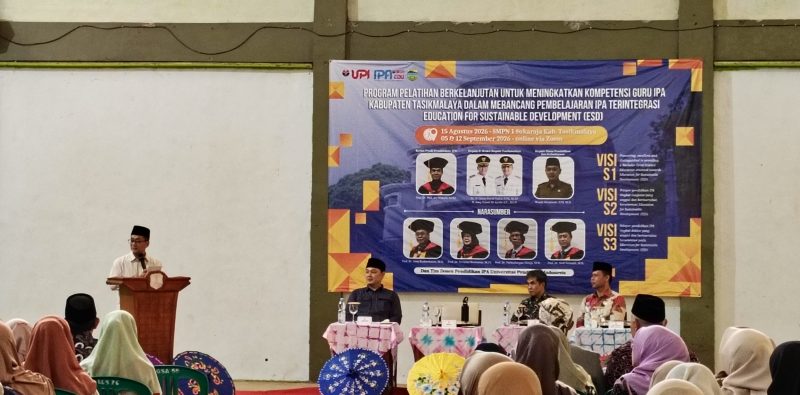
Tasikmalaya, 15 August 2026 – The Science Education Study Program (Program Studi Pendidikan IPA), Universitas Pendidikan Indonesia (UPI), held the first session of its community service program at SMPN 1 Sukaraja, Tasikmalaya Regency. The event brought together 100 science teachers from junior high schools (SMP) and Islamic junior high schools (MTs) across the regency. Its goal was to strengthen their capacity to design and deliver science learning oriented toward Education for Sustainable Development (ESD).
ESD has become an important agenda in education worldwide. It asks schools to prepare students to understand and respond to complex challenges such as environmental degradation, climate change, and responsible resource use. Science classrooms are well placed to lead this effort because many sustainability issues are rooted in scientific phenomena. Many teachers, however, still need support in translating ESD principles into concrete lessons, learning materials, and assessments. The program was designed to address that need.
The day began with a pretest on ESD-based learning. It measured participants’ initial knowledge and understanding of ESD concepts and principles before they took part in the training activities. The results give the organizing team a clear picture of participants’ starting point. They will also serve as a baseline for tracking how the teachers’ understanding develops as the program continues.
Formalizing a Long-Term Partnership
A key moment of the event was the signing of a Memorandum of Understanding (MoU) and an Implementation Agreement (IA). The Regent of Tasikmalaya, the Tasikmalaya Regency Office of Education and Culture, and the Head of the UPI Science Education Study Program signed the agreements.
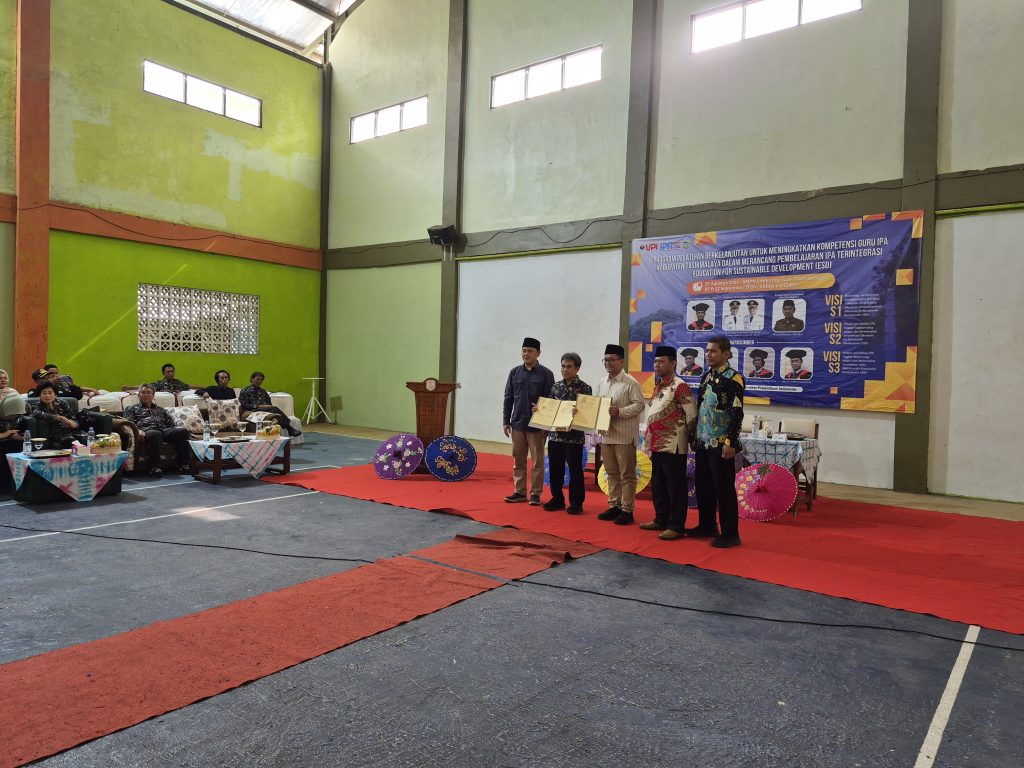
The agreements formalize the partnership and commit all parties to working together on a range of programs in education, research, and community service. The collaboration focuses in particular on improving the quality of science learning and on advancing sustainable education in Tasikmalaya. It gives future activities a stronger institutional footing. The goal is for the partnership to continue over the long term rather than end after a single training event.
Why ESD Matters in Science Classrooms
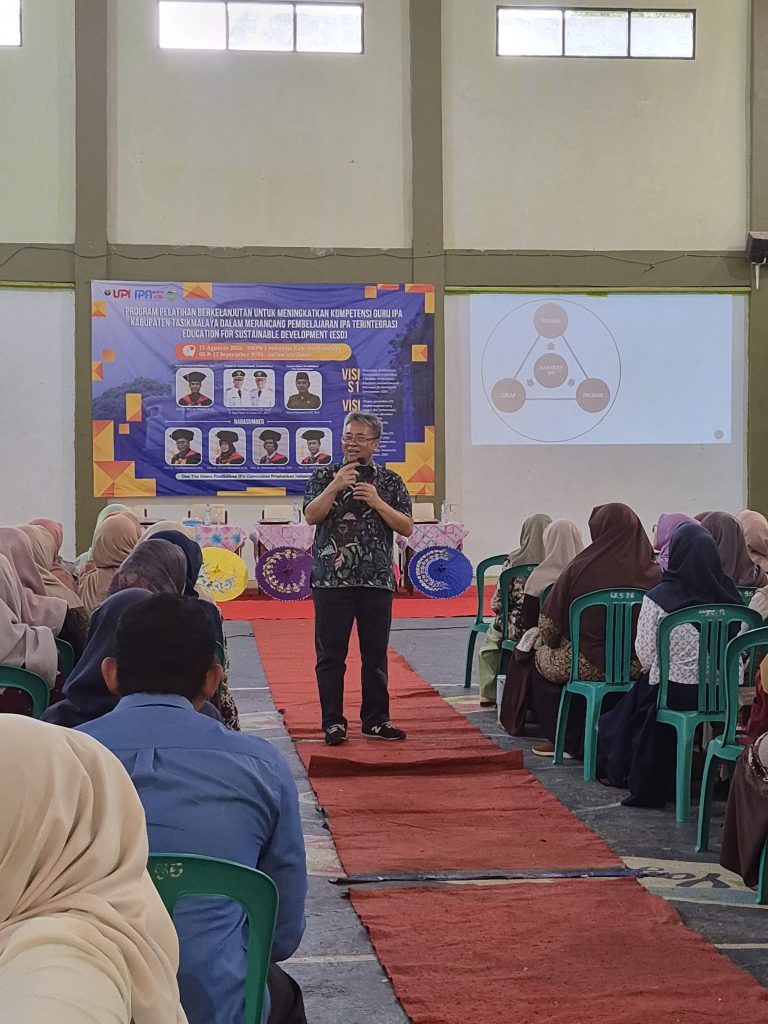
Following the signing, Prof. Asep Kadarohman, M.Si. delivered the keynote address on ESD-oriented science learning. He highlighted the importance of integrating sustainability principles into science education. He explained that science learning should do more than convey concepts. It should also equip students with the knowledge, skills, attitudes, and values they need to face the sustainability challenges of the future. His talk gave participants a shared framework for the more practical group sessions that followed.
Focused Group Sessions
Participants then split into three groups. Each group was led by a UPI professor and focused on one part of classroom practice, so teachers could explore a specific area in depth.
In the teaching module group, Prof. Parlindungan Sinaga, M.Pd. discussed how to develop and implement teaching modules (modul ajar) that integrate sustainability principles into science learning. The session looked at how ESD can be built into a module from the start rather than added as an afterthought.
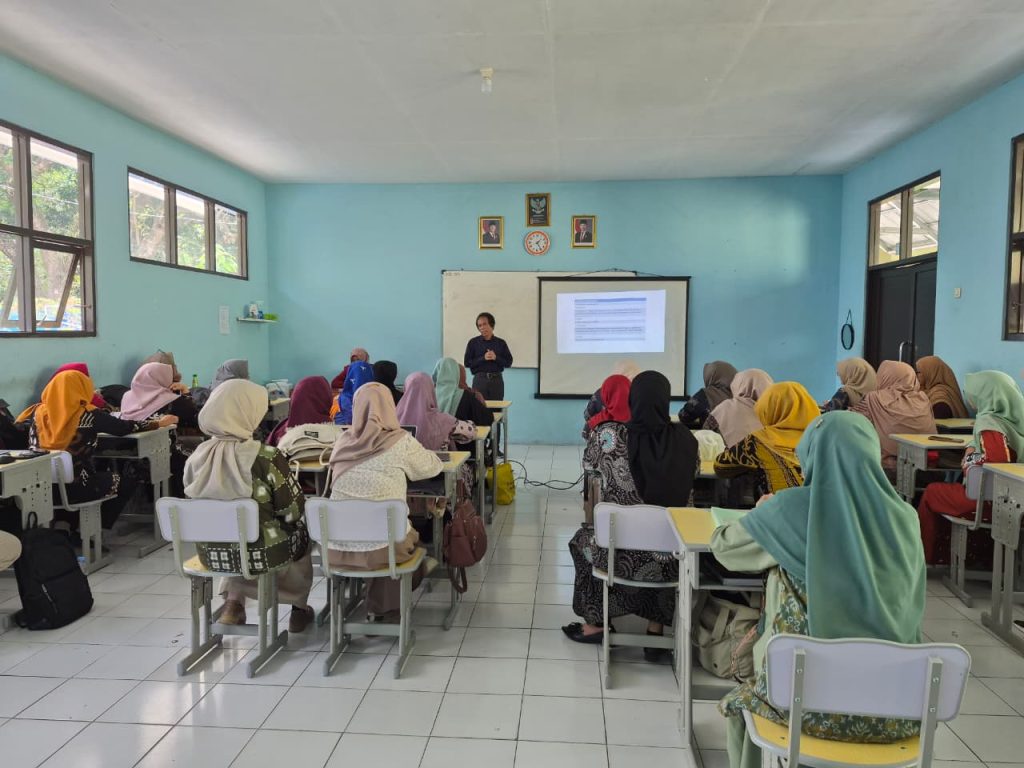
In the learning media group, Prof. Andi Suhandi, M.Si. addressed the use and development of learning media that support sustainability-oriented science instruction. Participants considered how well-chosen media can help students connect scientific concepts to real sustainability issues in their surroundings.
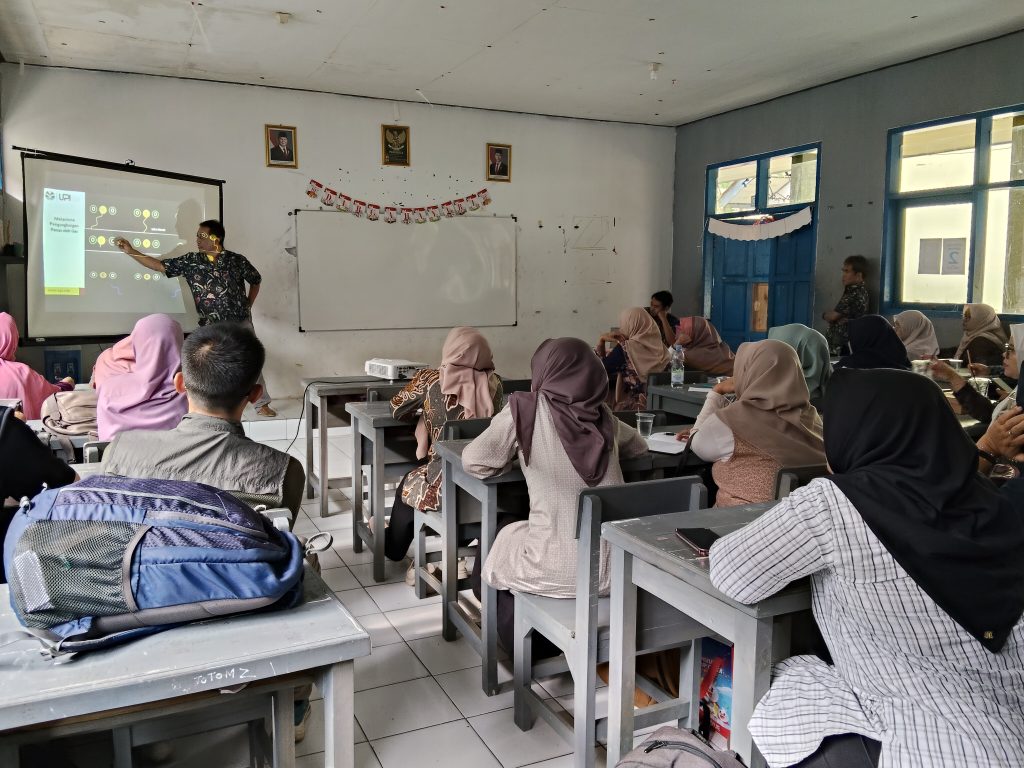
In the assessment group, Prof. Nuryani Rustaman, M.Pd. presented assessment concepts and strategies for measuring student competencies in science learning that integrates sustainability principles. The session helped teachers think about assessing not only students’ conceptual understanding but also the skills, attitudes, and values that ESD aims to develop.
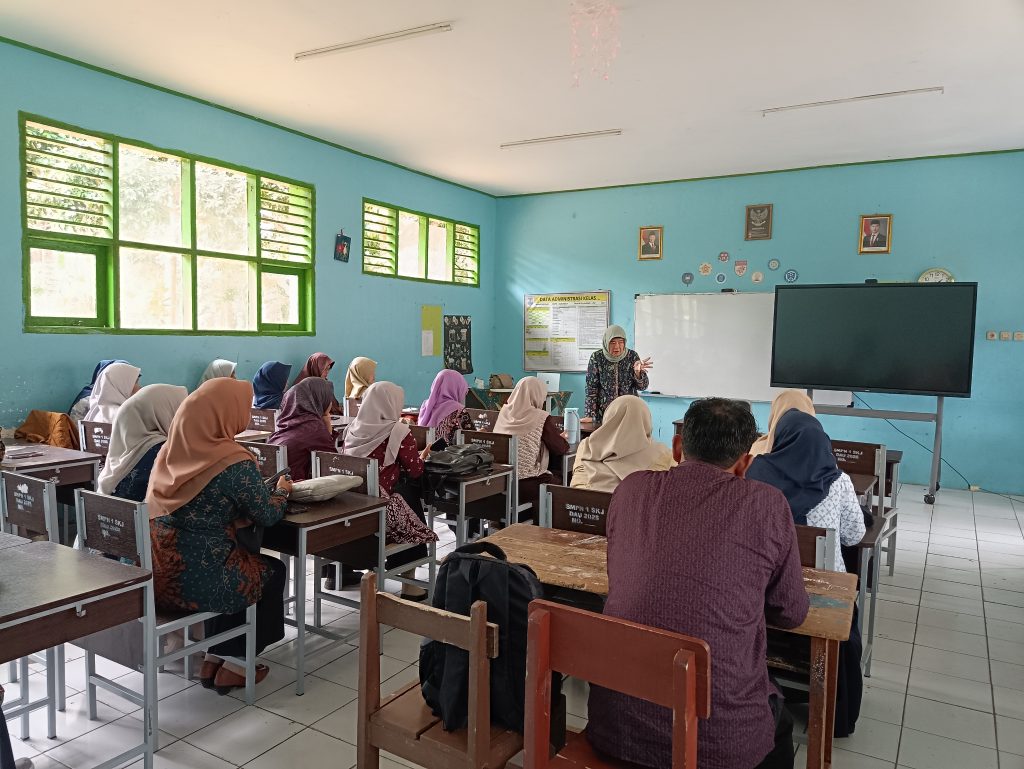
Together, the three groups covered the core parts of classroom practice: planning, teaching tools, and evaluation. Each participant left with focused guidance they can apply directly in their own school.
This first session marks the beginning of a broader collaboration between UPI and Tasikmalaya Regency. The program pairs a formal partnership agreement with hands-on professional development for teachers. That combination is meant to move ESD from policy and theory into everyday classroom practice across the regency.
The initiative reflects UPI’s commitment to community service as part of the Tri Dharma of higher education. It also highlights the role of the Science Education Study Program in supporting teachers and schools beyond the university. With further sessions to come, the program aims to help build a generation of science teachers ready to guide their students toward a more sustainable future.