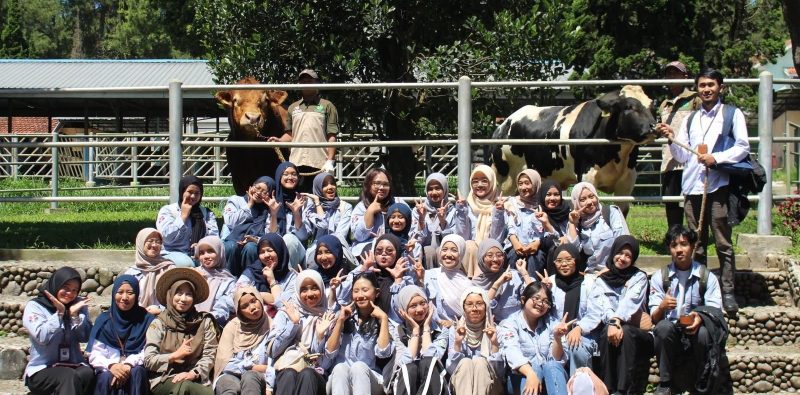
Students of the International Program on Science Education (IPSE) batch 2023 from Universitas Pendidikan Indonesia conducted a field trip to Balai Inseminasi Buatan (BIB) Lembang on Monday, April 13, 2026. Upon arrival, the student group was warmly welcomed by Fitri Dian Anggraeni, S.Pt., M.Biotek., the person in charge of the BIB Lembang educational tourism program. In her opening remarks, she introduced the history, facilities, and main programs of BIB Lembang, while highlighting the institution’s contribution in supporting the improvement of livestock genetic quality through the production of high-quality frozen semen.
During the visit, students had the opportunity to observe the practical stages of frozen semen production, starting from semen collection, quality testing, processing, and storage. They were also introduced to the distribution system, including how semen can be ordered through the institution’s official platform.
To ensure the visit ran smoothly and safely, achieved its learning objectives, and served not merely as a recreational trip but as an applicative and meaningful learning experience, the students were accompanied by supervising lecturers, Dr. Lilit Rusyati, S.Pd., M.Pd., Putra Habib Dhitareka, S.Pd., M.Pd., and laboratory assistant, Resik Ajeng Maria, S.Si., M.Pd., throughout the activity.
The field trip aimed to enhance students’ understanding of biotechnology applications in animal reproduction, particularly in preserving genetic material so that superior livestock traits can be maintained even after the original animals are no longer alive.
This field trip was organized as part of the Biotechnology course to bridge theoretical knowledge with real-world practices. BIB Lembang, as one of Indonesia’s leading institutions in livestock reproductive technology, plays a significant role in supporting national agricultural productivity. Through this visit, students were expected to gain a deeper understanding of how biotechnological principles are implemented in professional settings.
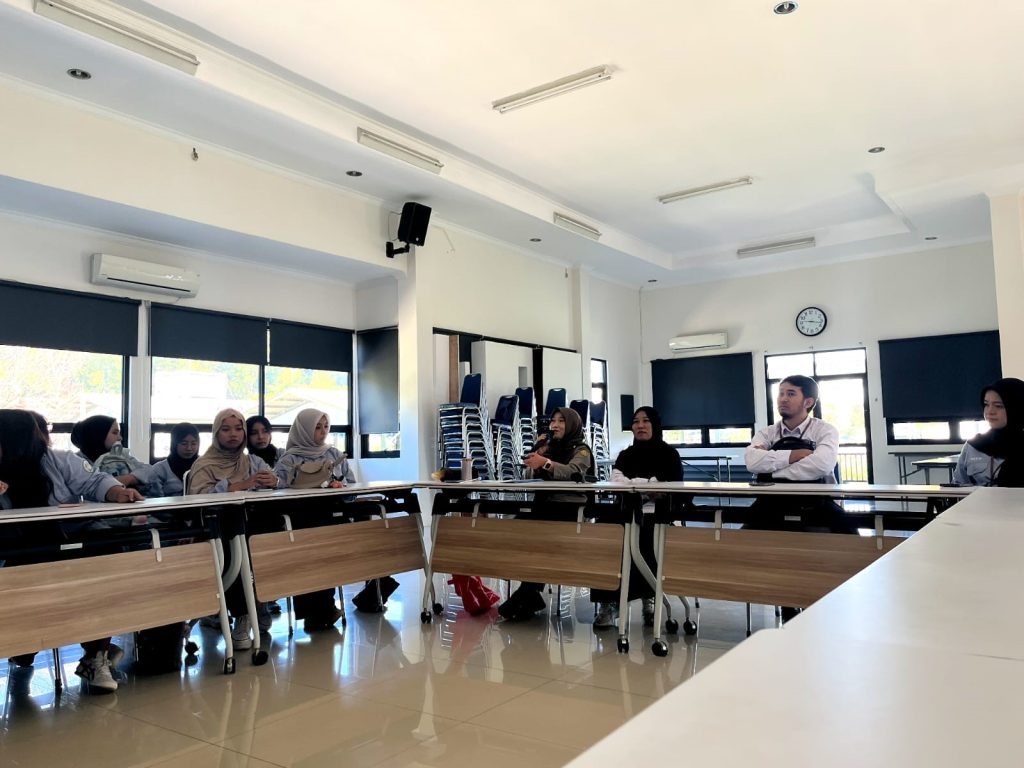
During the visit, students engaged in a series of learning activities that offered a comprehensive look at artificial insemination and livestock genetic improvement at BIB Lembang. The session opened with an institutional introduction, where students learned that BIB Lembang not only manages cattle, but also breeds goats, buffalo, sheep, and rabbits. However, due to stricter facility protocols, students were only permitted to observe the cattle and rabbit sections directly.
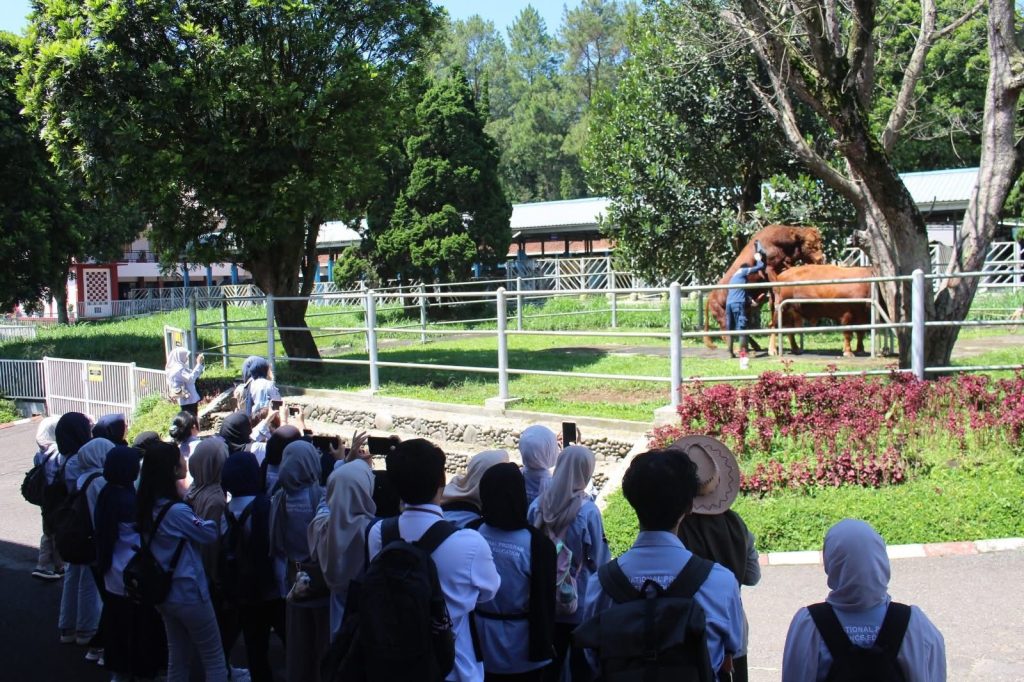
A standout moment was the live observation of semen collection, where students witnessed the Artificial Vagina (AV) method in practice. The process involves a trained teaser bull to stimulate the donor bull’s mounting behavior, while the collector redirects the penis into an artificial vagina device for safe and hygienic semen collection. Students also observed the laboratory facilities, where experts walked them through semen processing and storage from quality evaluation to cryopreservation before it is distributed to various regions across Indonesia.
Observation of the process of obtaining sperm from cows
The visit also shed light on BIB Lembang’s sustainable practices, including a cattle waste management system that converts livestock waste into biogas. Students even had the chance to see the rabbit enclosures up close, learning about how the animals are bred, an experience memorable enough that some students went home with a rabbit of their own.
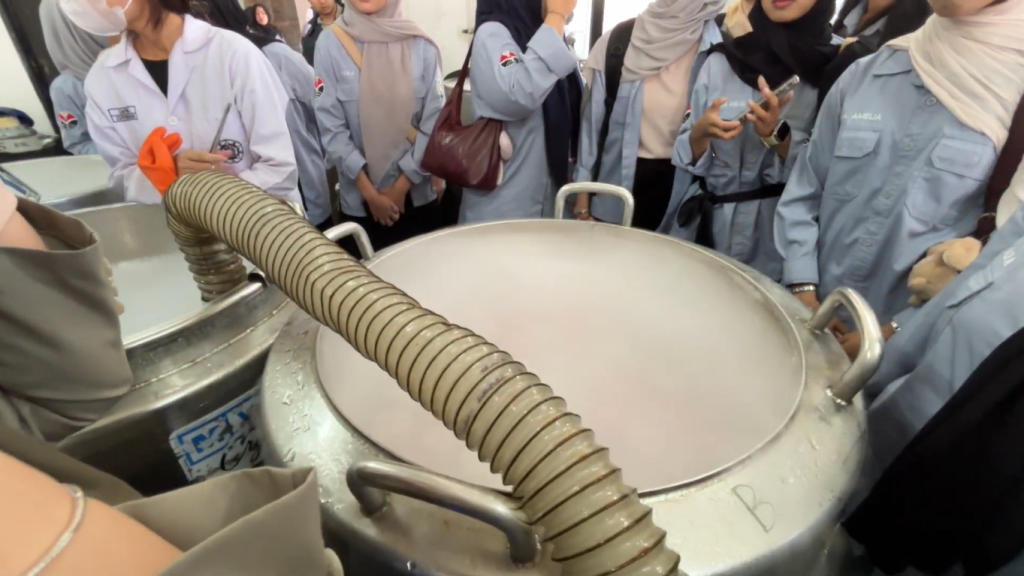
Observation of laboratory facilities
Throughout the session, students were encouraged to interact directly with the guiding experts, deepening their understanding of both the technical and operational sides of the institution.
From this activity, the students gained valuable insights into the practical application of biotechnology in real life, particularly in efforts to improve livestock quality and support more sustainable and environmentally friendly agriculture. They not only understood the concepts in theory but also saw firsthand how the technology is applied. This experience also helps students connect the concepts they have learned in class with real-world practices in the workplace, thereby deepening and clarifying their understanding of the material.
Overall, the field trip provided a meaningful learning experience and is expected to encourage students to further explore the role of biotechnology in solving real-world problems. Through direct observation of semen collection, processing and artificial insemination techniques, the students gained a deeper understanding of the role of biotechnology in improving livestock quality and supporting sustainable agriculture. Such experiential learning activities are essential in shaping well-rounded science education students who are ready to engage with and contribute to solving real-world challenges through biotechnology.
Contributor: IPSE 2023 Students