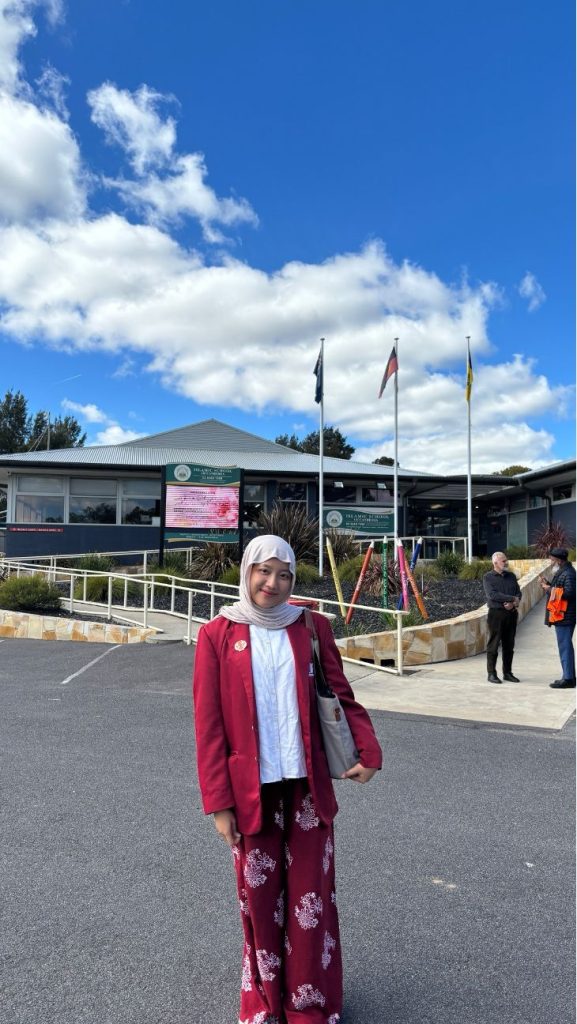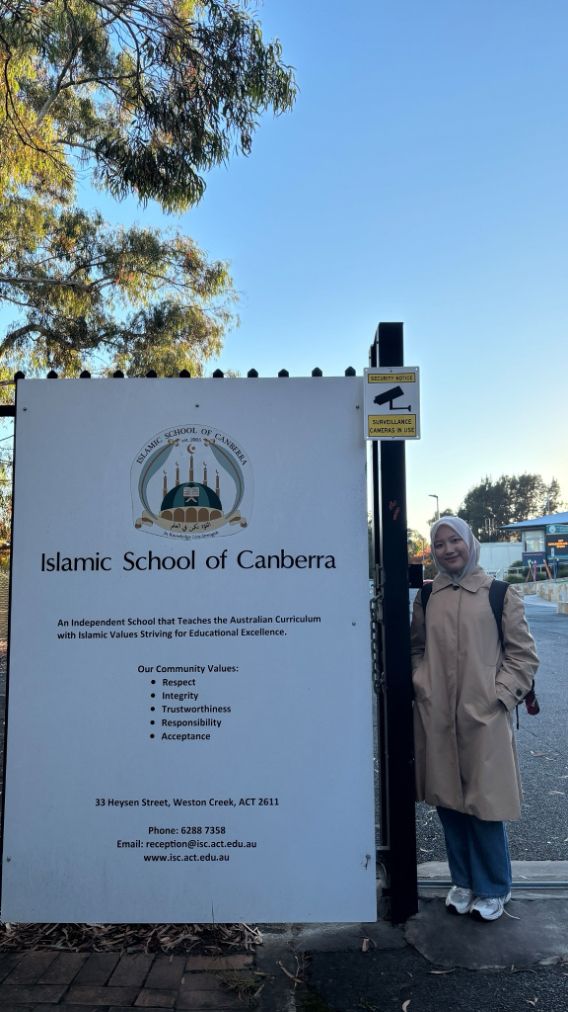
Bandung, 27 July 2026. Annisa Fitriani, a student of the International Program on Science Education (IPSE) at Universitas Pendidikan Indonesia, participated in the Indonesian Teaching Assistant Term 2-2026 Program organized by the Embassy of the Republic of Indonesia (KBRI) Canberra through the Education and Cultural Attaché (Atdikbud), collaborates with Universitas Pendidikan Indonesia (UPI). From mid-April to early July 2026, she carried out her teaching placement at Islamic School of Canberra, Australia, gaining valuable experience in teaching and learning within an international and multicultural educational environment.
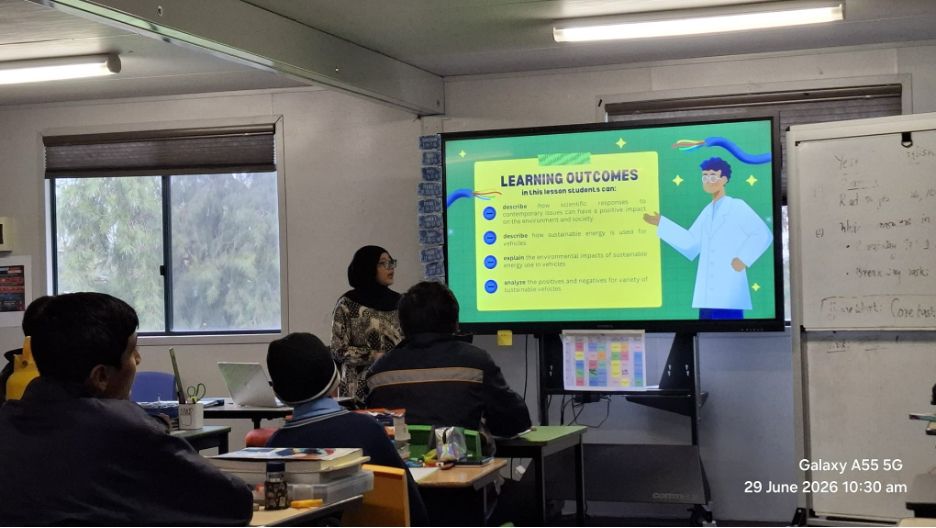
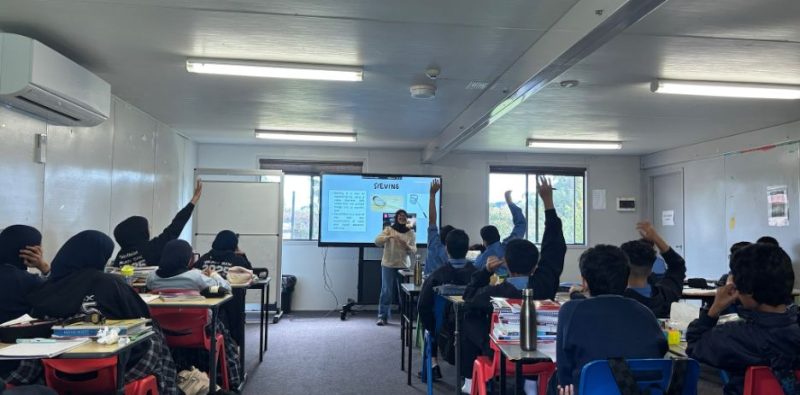
During the program, Annisa was involved in teaching and learning activities across various year levels, with a particular focus on science and mathematics classes. The experience provided her with an opportunity to apply and further develop the pedagogical and subject-specific knowledge gained through her studies in IPSE. She observed classroom practices, assisted mentor teachers, and delivered science lessons while learning to adapt teaching strategies to students with diverse backgrounds and learning needs. Through direct engagement with the school environment, she also gained insights into science education and classroom practices within an international context, including the integration of STEM and sustainability-related learning. Annisa also adapted to the Australian Curriculum with the support of her mentor teachers, classroom observations, and resources from the Australian Education Research Organisation (AERO) website, which she used as a key reference for exploring research-based classroom practices.
The teaching placement at Islamic School of Canberra became a meaningful part of Annisa’s academic and professional journey as a future science educator. Beyond strengthening her teaching competencies, the experience enhanced her communication skills, adaptability, and cross-cultural understanding. It also broadened her perspective on the role of science educators in international school environments and encouraged her to continue developing the knowledge and skills needed to create meaningful science learning experiences for her students.